Tampa, FL
Dryer Vent Cleaning in Tampa, FL
A blocked dryer vent is the most common cause of slow drying and the most common cause of laundry fires. We clear the run from the machine to the exterior hood.
- Phones answered, day and night
- Most repairs finished on the visit
- Major brands serviced
- Tampa based, not a call center
The Short Answer
Dryer vent cleaning in Tampa clears lint from the machine connection, along the full duct run and out at the exterior hood, then confirms airflow at the outlet. It usually restores drying times immediately, and it removes the most common cause of laundry fires. Once a year is a reasonable interval for most homes, sooner for long attic runs.
What a Vent Cleaning Actually Clears
A dryer removes moisture by carrying it out of the house in hot air. Anything that restricts that air path makes the machine work longer and hotter for the same result, and lint is what restricts it.
Lint collects in three places. The transition duct behind the machine, which gets crushed as well as packed. The main run through a wall, a soffit or an attic, where it settles at low points and elbows. And the exterior hood, where a stuck damper or a bird nest can close the path entirely.
Clearing all three is what makes the difference. Clearing only the part behind the machine is what most owners can reach, and it is usually the least blocked section.
Why Tampa Vent Runs Block Faster
Tampa homes have two vent patterns and each blocks in its own way. The newer subdivisions in Westchase, New Tampa, Valrico and Lithia put the laundry room inside the house, which means a long duct run through a wall cavity or an attic before it reaches an exterior wall.
Attic runs are the worst offenders because flexible duct sags between supports. Lint settles at the low point, moisture from the dryer keeps it damp, and over a few years it compacts into a plug that no amount of running the machine will clear.
The older neighborhoods have short runs but different problems. In Seminole Heights, West Tampa and East Tampa, the duct behind the machine is often crushed flat against the wall, or the run exits under a low soffit where lint packs at the elbow. In several cases we have found runs that never terminated properly outside at all.
Humidity is the multiplier across all of it. Lint that stays slightly damp compacts rather than blowing clear, which is why the same duct length blocks faster here than it would in a dry climate. Carport and outdoor laundry installs around Wellswood, Carver City and Gandy see this most.
What Clearing the Run Changes
Drying times come back
Usually the most noticeable change, and it happens the same day.
A real fire risk is removed
This is not a marketing line. Lint plus heat is the leading laundry fire cause.
The dryer stops overheating
Which is what protects the thermostats, the fuse and the element.
Energy use drops
A dryer running three cycles instead of one costs three times as much to run.
Airflow gets confirmed
Measured at the exterior hood rather than assumed from how the duct looks.
What a Vent Cleaning Visit Covers
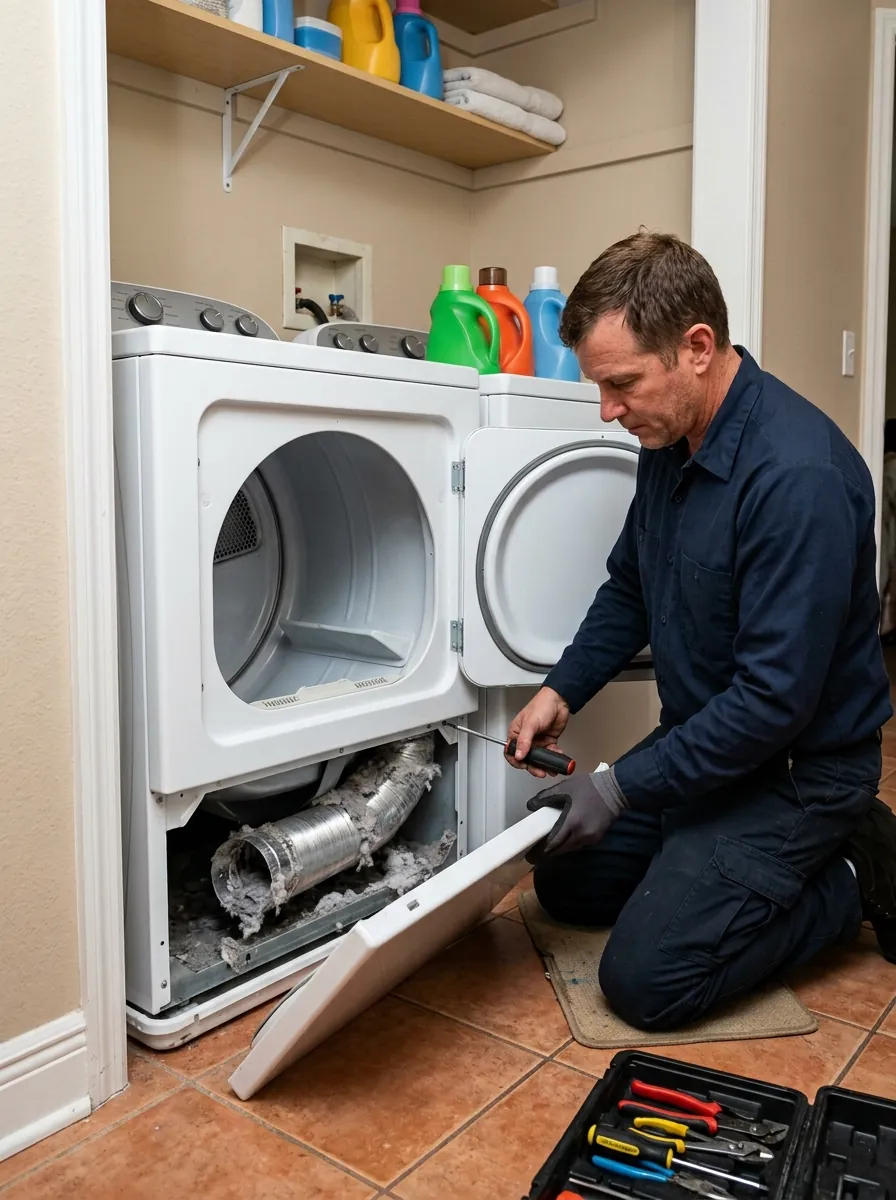
- Dryer pulled forward and the transition duct disconnected
- Transition duct cleared or replaced if crushed or damaged
- Main duct run cleared with brush and vacuum from the machine end
- Attic or wall sections cleared where accessible
- Exterior vent hood opened and cleared
- Damper checked for free movement and closure
- Blower wheel and machine lint housing checked for packing
- Duct joints checked for separation and resealed where needed
- Airflow confirmed at the exterior hood with the dryer running
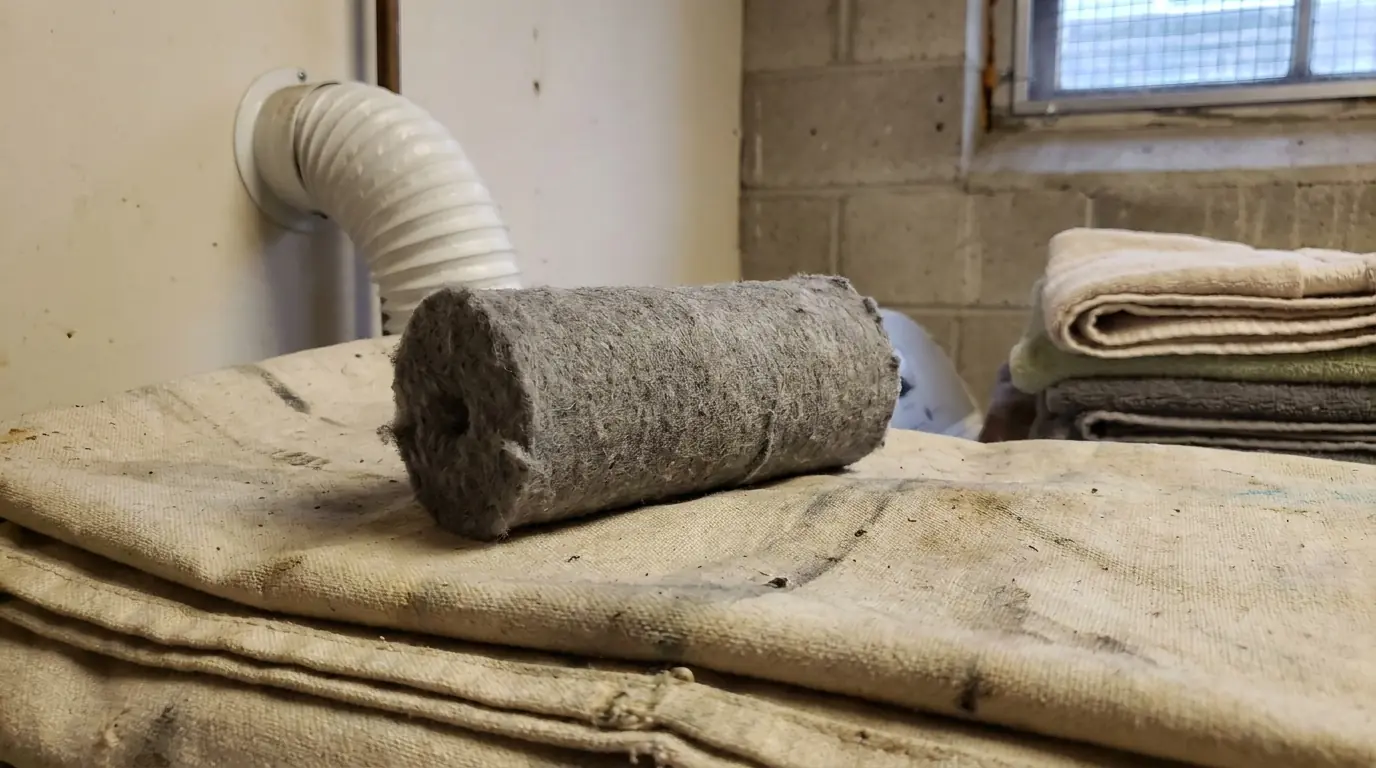
Two cycles to dry one load?
That is airflow, not the dryer wearing out. Clearing the run usually restores drying time in a single visit.
Signs Your Vent Needs Clearing Now
Loads need two or three cycles
The clearest sign. Heat is being made and moisture is not leaving.
The laundry room gets very warm during a cycle
Heat that should be going outside is staying in the house.
Clothes come out hot but damp
The signature symptom of a restricted vent.
A burning or scorched smell
Stop using the dryer. Lint against a heat source is how laundry fires start.
Lint visible around the exterior hood
The damper is being held open or the run is overflowing.
What Happens on a Vent Cleaning Visit
Tell us the setup
Where the dryer sits, roughly how far the run goes, and how long drying takes now.
We book the visit
A scorched smell moves it up. Slow drying is schedulable.
The machine comes forward
Transition duct disconnected and inspected first.
The run gets cleared
Brush and vacuum from the machine end, with the exterior hood opened as well.
Airflow gets confirmed
Measured at the outlet with the dryer running rather than assumed.
How Long a Vent Cleaning Takes
A straightforward exterior wall run takes about an hour, including moving the machine and confirming airflow afterwards.
Long attic or interior wall runs take longer, often ninety minutes to two hours, because each section has to be worked separately.
Where the transition duct or the exterior hood needs replacing, add a little time, though both are usually done in the same visit.
What Dryer Vent Cleaning Costs in Tampa
Vent cleaning is priced mostly on the length and accessibility of the run. These are Tampa planning ranges, not quotes.
Length of the run
A short exterior wall run is the simplest and generally lands between $125 and $215.
Attic or interior wall sections
Long runs through an attic take longer and cost more.
Transition duct replacement
A crushed or damaged duct behind the machine is worth replacing rather than reusing.
Exterior hood condition
A seized damper or a damaged hood may need replacing.
Access to the run
A run behind a soffit or a finished ceiling is harder to reach and clear.
Combining with a dryer repair
Doing both in one visit costs less than two separate ones.
Figures on this page are general planning ranges for the Tampa area, not a quote. The machine, the part and how hard it is to reach all move the number.
What You Can Clear Yourself
| Situation | Doing it yourself | Calling us |
|---|---|---|
| Lint screen | Clean it every load. Genuinely the most useful habit there is. | We check the housing below it, which packs with lint the screen does not catch. |
| Transition duct behind the machine | Reachable and worth clearing if you can move the dryer. | We replace it where it is crushed, which is often the real restriction. |
| The main run | Not reachable for most owners. | Cleared with brush and vacuum along the full length. |
| Attic sections | Not a job to attempt. | We clear sagging sections and check for separated joints. |
| The exterior hood | Visible from outside and worth looking at. | We open it, clear it and confirm the damper moves freely. |
Vent Runs Across Tampa Homes
Interior laundry rooms with long attic runs are the pattern across Westchase, New Tampa, Valrico, Lithia and the newer parts of Riverview, and those homes benefit most from a proper clearing.
In the older bungalow neighborhoods of Seminole Heights, Tampa Heights, West Tampa and East Tampa, the runs are short but the duct is often crushed behind the machine or packed at a soffit elbow.
Carport and outdoor laundry installs around Wellswood, Carver City, Gandy and Port Tampa deal with outdoor humidity keeping lint damp, which compacts it rather than letting it blow clear.
ZIP codes we cover for this repair
These are the areas this service runs into most, with the ZIP each one falls under.
- Downtown Tampa (33602)
- Channel District (33602)
- Ybor City (33605)
- Tampa Heights (33602)
- Seminole Heights (33603)
- Riverside Heights (33603)
- Wellswood (33603)
- Sulphur Springs (33604)
- St. Petersburg (33701)
- Brandon (33511)
- Clearwater (33755)
- Riverview (33578)
- Largo (33770)
- Wesley Chapel (33544)
- Pinellas Park (33781)
- Plant City (33563)
Why This Is Worth Doing Properly
The whole run gets cleared
Not just the part behind the machine, which is the section owners can already reach.
Airflow is measured
At the exterior hood with the dryer running, which is the only honest confirmation.
The duct goes back uncrushed
Reconnecting badly undoes the entire visit.
Vent Cleaning Questions We Get Asked
About once a year for most homes. Sooner if the run goes through an attic, if the run is long, or if you dry a lot of towels and bedding, which shed far more lint than clothing.
In most cases yes, provided the machine itself is healthy. If the dryer is making heat but clothes come out hot and damp, airflow is the problem and clearing the run resolves it.
Yes. Lint is highly combustible and a blocked vent pushes the dryer into repeated overheating. It is the leading cause of laundry fires and it is entirely preventable.
You can clear the transition duct behind the machine, which is worth doing. The sections in a wall or an attic are where the real blockages sit, and those are not reachable from inside the laundry room.
Then it is the type most likely to be blocked. Flexible duct sags between supports, lint settles at the low point and compacts. Those runs take longer to clear and give the biggest improvement.
A short exterior wall run generally lands between $125 and $215. Long attic runs cost more. These are planning ranges rather than quotes.
Almost certainly. The thermal fuse blows when the machine overheats, and machines overheat when the hot air cannot leave. Replacing the fuse without clearing the vent means it happens again.
Yes. A seized damper or a broken hood defeats the whole point of clearing the run, so it is worth sorting in the same visit.
Services That Pair With This
Book a vent clearing
Tell us where the dryer sits and roughly where the duct exits. That tells us how long the run is likely to be.