Tampa, FL
Dryer Repair in Tampa, FL
A dryer that runs but will not dry is usually heat, airflow or both. We repair electric and gas dryers across Tampa and check the vent run while we are there.
- Phones answered, day and night
- Most repairs finished on the visit
- Major brands serviced
- Tampa based, not a call center
The Short Answer
A Tampa dryer that runs without heat is usually a failed heating element, a blown thermal fuse or a tripped high limit thermostat, and a blocked vent is what caused most of those. A dryer that will not start at all points at the door switch, the start switch or the motor. We check the vent path on every visit because it is the root cause more often than the part is.
Why a Dryer Runs but Will Not Dry
A dryer does three things: it turns the drum, it makes heat, and it moves air out of the house. When drying takes longer, at least one of those three has weakened, and airflow is the usual answer.
No heat at all is a different group. On an electric dryer that is the heating element, a thermal fuse or a high limit thermostat. On a gas dryer it is the igniter, the flame sensor or the gas valve coils. Each of those tests cleanly with a meter, so there is no reason to replace parts speculatively.
A dryer that will not start is a third group entirely, and a short one: the door switch, the start switch, the thermal fuse or the motor. The good news is that the fuse and the switches are cheap parts.
Signs Your Dryer Needs Attention Now
Loads need two or three cycles
Airflow has dropped. The machine is heating fine and the moisture has nowhere to go.
The dryer or the laundry room gets very hot
Heat that should be leaving the house is staying in it. That is a blocked vent and a fire risk.
Clothes come out hot but damp
Classic restricted vent signature. Heat is being made, moisture is not being carried away.
A burning or scorched smell
Stop using it. That is lint against a heat source, and it needs looking at immediately.
The drum turns but there is no heat
An element, fuse or thermostat on electric, or the igniter circuit on gas.
What Happens After You Call About a Dryer
Describe the symptom
No heat, no start, long drying times or a noise. Tell us electric or gas and the brand.
We book the visit
A burning smell moves to the front of the queue. That one is not a wait and see.
Diagnosis at the house
Heat circuit, motor circuit and airflow get checked, in that order.
You get the number
The failed part, the labor, and whether the vent needs work as well.
The repair
Elements, fuses, thermostats, belts, rollers and igniters are common van stock.
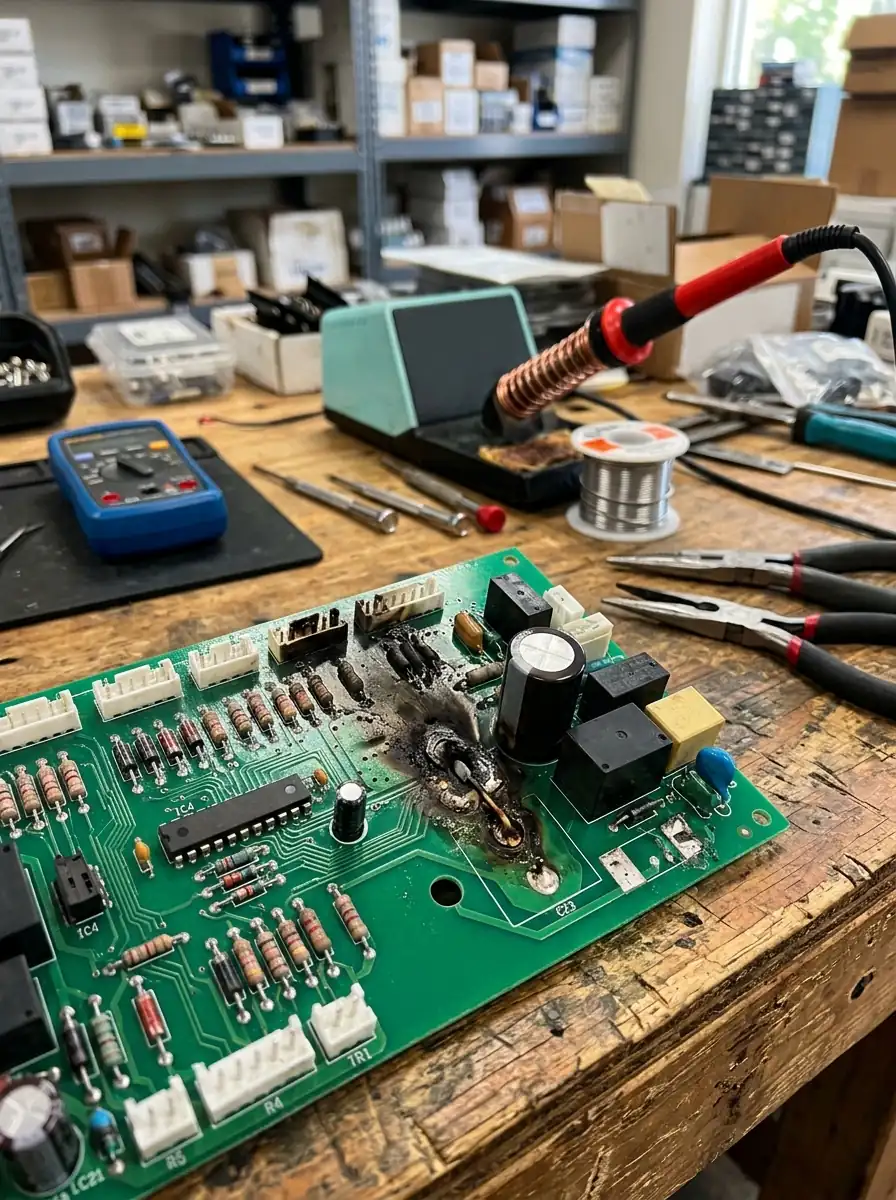
Taking three cycles to dry one load?
That is usually airflow, not the machine giving up. Call and we will check the element, the thermostats and the vent path in one visit.
The Vent Is Usually the Real Story
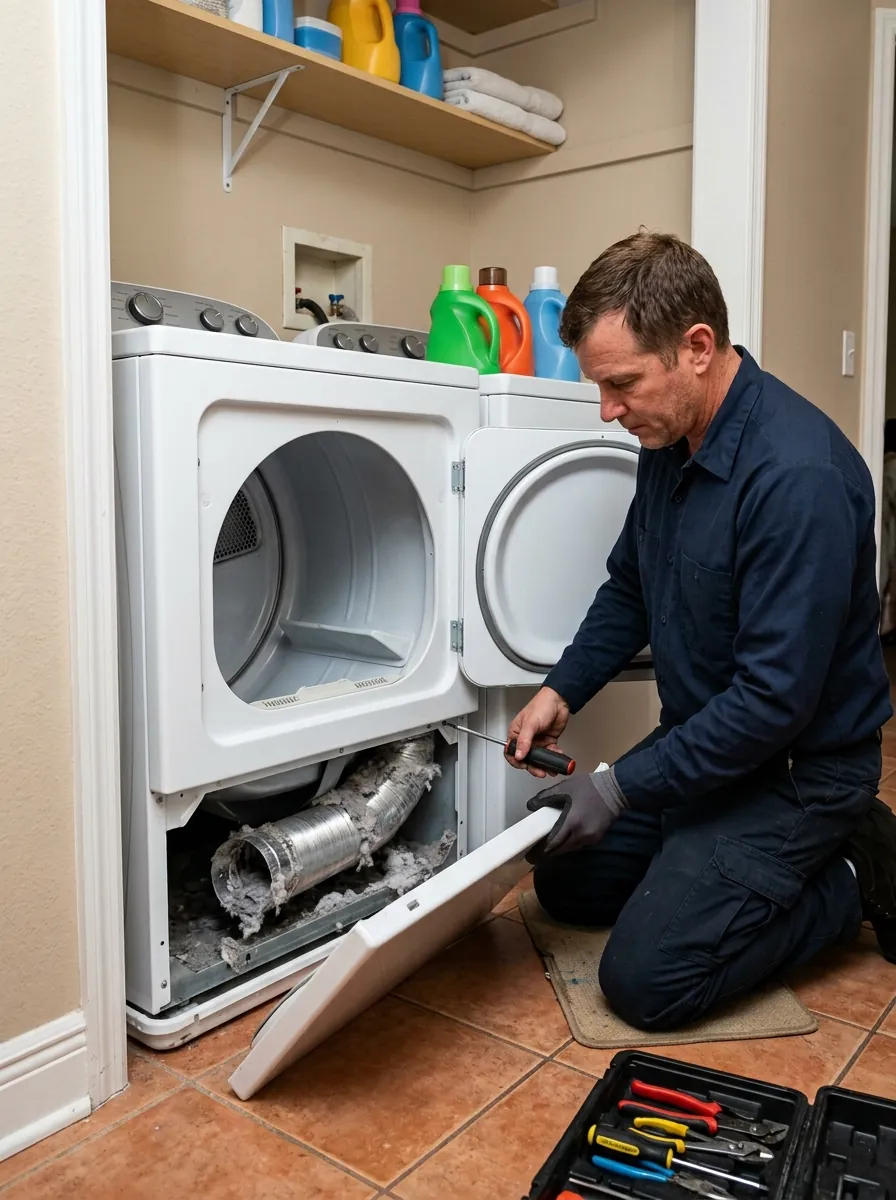
The thermal fuse exists to protect the machine. It blows when the dryer overheats, and dryers overheat when the hot air cannot leave. So a blown fuse is not usually a story about the fuse. It is a story about the duct.
Tampa homes make this worse in a few specific ways. Interior laundry rooms in Valrico, Westchase and New Tampa often have long duct runs through an attic or a wall cavity before reaching an exterior wall, and every foot and every elbow reduces airflow. Attic runs sag over time and the low point collects lint until it becomes a plug.
Older neighborhoods have the opposite problem. In Seminole Heights, Tampa Heights and West Tampa, the run is short but frequently made of flexible foil duct crushed behind the machine, or it exits under a low soffit that packs with lint. In East Tampa we regularly find vents terminating somewhere that never let the air out properly in the first place.
Then there is the carport install, common in Wellswood, Carver City and around Gandy. Those machines live in outdoor humidity, and the housings corrode while lint stays damp instead of blowing clear. When a dryer in an open carport starts taking two cycles, the duct is where we look first.
What a Dryer Repair Visit Covers
- Heating element or gas burner circuit tested with a meter
- Thermal fuse, cycling thermostat and high limit thermostat checked
- Igniter, flame sensor and gas valve coils tested on gas models
- Door switch, start switch and timer or board function verified
- Drum belt, idler pulley and drum rollers inspected for wear
- Blower wheel checked for lint packing and free rotation
- Vent duct inspected from the machine to the exterior outlet
- Airflow confirmed at the exterior vent hood
- Lint trap housing cleared of accumulated lint
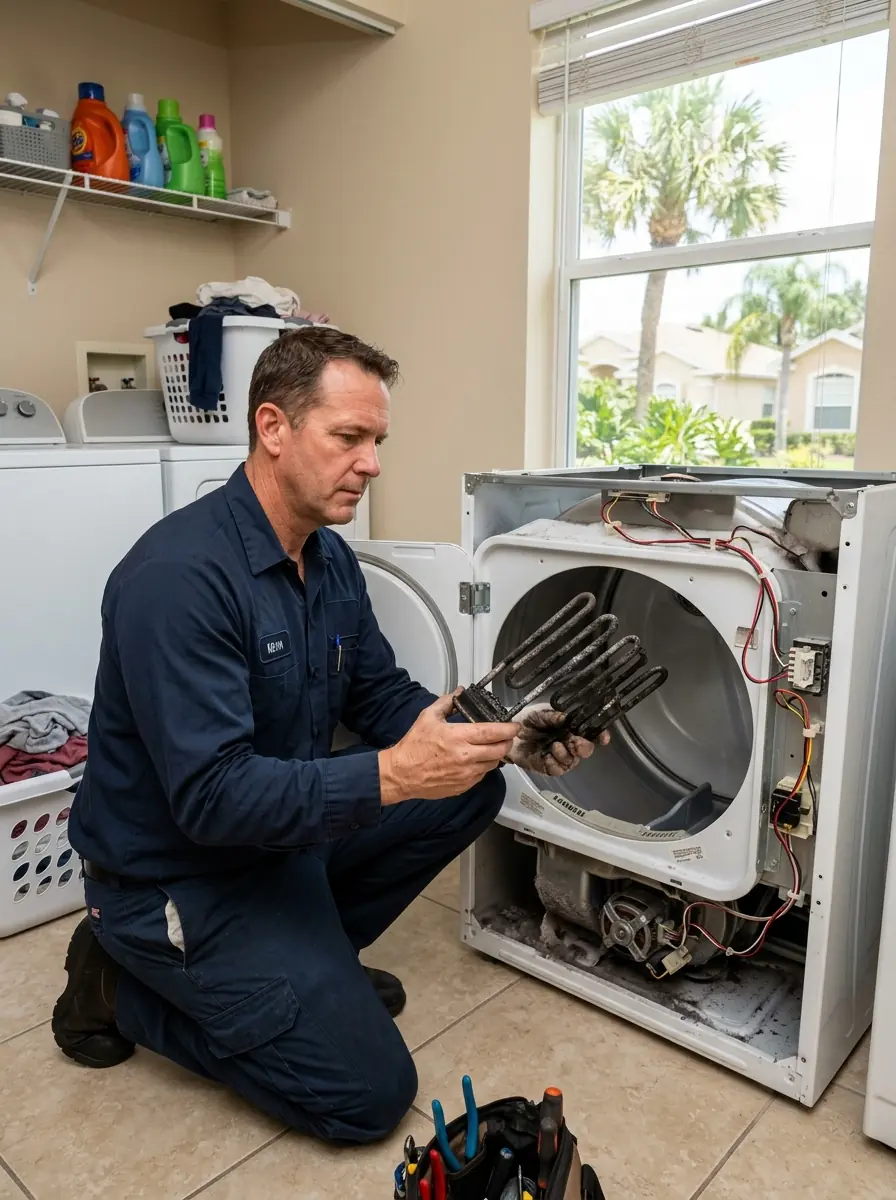
What Gets Fixed Beyond the Broken Part
The cause gets fixed, not just the symptom
Replacing a thermal fuse without clearing the vent that blew it means you call again in a month.
The vent path gets checked
Airflow is measured at the outlet, not assumed from the look of the duct.
Gas dryers get tested properly
Igniter, sensor and valve coils each get checked in sequence.
Drying time comes back
Most people notice the airflow difference more than the part replacement.
A fire risk gets removed
Lint plus heat is the most common laundry fire cause, and it is preventable.
How Long a Dryer Repair Takes
Most dryer repairs are a single visit of about one to two hours. Elements, fuses, thermostats, belts and rollers all fall into that window.
Vent clearing adds time depending on the run. A short run behind the machine is quick. A long attic run in a Westchase or New Tampa home takes longer, and it is the work that gives you the biggest change in drying time.
Control boards and timers on newer machines may need ordering, which turns it into two visits.
Which Dryer Faults You Can Handle Yourself
| Situation | Doing it yourself | Calling us |
|---|---|---|
| Drying takes longer than it used to | Cleaning the lint screen and the visible duct is worth doing yourself. | We clear the full run including the attic or wall section and measure the airflow at the outlet. |
| No heat on an electric dryer | Not recommended. Testing the element means working around 240 volt connections. | Element, fuse and both thermostats get tested in sequence, and we find why the fuse blew. |
| Dryer will not start at all | Checking whether the door latch clicks is a fair first step. | Door switch, start switch, fuse and motor get tested individually. |
| Squealing drum | Some owners replace rollers and belts themselves. | We replace the wear parts as a set, because the survivor usually fails soon after. |
| Any gas dryer fault | Leave gas components alone. | Igniter, sensor and valve coils tested, with the gas connection checked. |
What Dryer Repair Costs in Tampa
Dryer repairs are among the more affordable appliance jobs, mostly because the parts are simple. These are general Tampa ranges, not quotes.
Which part failed
Elements, fuses, thermostats, belts and rollers are the common group, generally $145 to $310 with labor.
Electric or gas
Gas dryers have more components in the heat circuit, so diagnosis takes longer.
Vent condition
A duct that needs clearing from the machine to the outside is separate work and worth doing at the same visit.
Where the machine sits
A stacked unit or a machine wedged into a closet takes longer to open than one in a garage.
Boards and timers
Electronic controls are model specific and cost more than mechanical parts.
Drum work
Rollers, belt and pulley done together cost more in labor than any one of them alone, and it is still the right call.
Figures on this page are general planning ranges for the Tampa area, not a quote. The machine, the part and how hard it is to reach all move the number.
Dryer Work in Tampa Garages, Closets and Porches
Where the dryer lives shapes the job. Garage installs across Brandon, Riverview, Town n Country and Carrollwood run hot all summer, and heat is hard on thermostats and boards.
Interior laundry rooms in the newer subdivisions of Westchase, New Tampa and Lithia trade convenience for long duct runs. Those homes get the most benefit from a proper vent clearing, and they are where sagging attic ducts show up.
In the older bungalow neighborhoods and the carport installs around Wellswood, Carver City and Gandy, the duct is short but often crushed or corroded, and outdoor humidity keeps lint damp instead of letting it blow clear.
ZIP codes we cover for this repair
These are the areas this service runs into most, with the ZIP each one falls under.
- Downtown Tampa (33602)
- Channel District (33602)
- Ybor City (33605)
- Tampa Heights (33602)
- Seminole Heights (33603)
- Riverside Heights (33603)
- Wellswood (33603)
- Sulphur Springs (33604)
- St. Petersburg (33701)
- Brandon (33511)
- Clearwater (33755)
- Riverview (33578)
- Largo (33770)
- Wesley Chapel (33544)
- Pinellas Park (33781)
- Plant City (33563)
Why People Call Us for Dryers
We look at the vent every time
Most dryer parts fail because of airflow. Replacing the part alone just resets the clock.
Electric and gas both
Gas heat circuits are tested properly rather than swapped part by part.
Wear parts get replaced as a set
When rollers go, the belt and pulley are usually close behind.
Dryer Questions We Get Asked
On an electric dryer it is usually the heating element, the thermal fuse or a high limit thermostat. On a gas dryer it is the igniter, the flame sensor or the valve coils. All of them test cleanly with a meter, so the right one gets replaced.
Airflow. The machine is making heat but the moist air is not leaving fast enough. That is usually a blocked or crushed vent duct, sometimes a lint packed blower wheel.
Yes. Lint against a heat source is the most common cause of laundry fires, and a blocked vent also pushes the machine into repeated overheating. It is genuinely worth clearing.
Once a year is a reasonable baseline. Sooner if the run is long, if it goes through an attic, or if you dry a lot of towels and bedding.
It can for a short while, but the noise is a roller or an idler pulley wearing out, and when one seizes it can damage the belt and the drum. Cheap now, expensive later.
Common repairs land between $145 and $310 with parts and labor. Vent clearing and control boards are priced separately. Those are planning ranges rather than quotes.
Yes. Igniter, flame sensor and gas valve coils are ordinary diagnosis for us, and the gas connection gets checked as part of the visit.
Yes, and it is common here. Those installs corrode faster and hold damp lint, so the vent and the housing both get a closer look.
Repairs That Pair With This One
Get the dryer heating again
Tell us whether it makes heat, makes noise or will not start at all. That answer decides what rides along on the van.