Maintenance
What Hard Water Does to Your Appliances
Poor dishwasher cleaning, small ice cubes, a water heater that runs out early. One cause sits behind all three.
The Short Answer
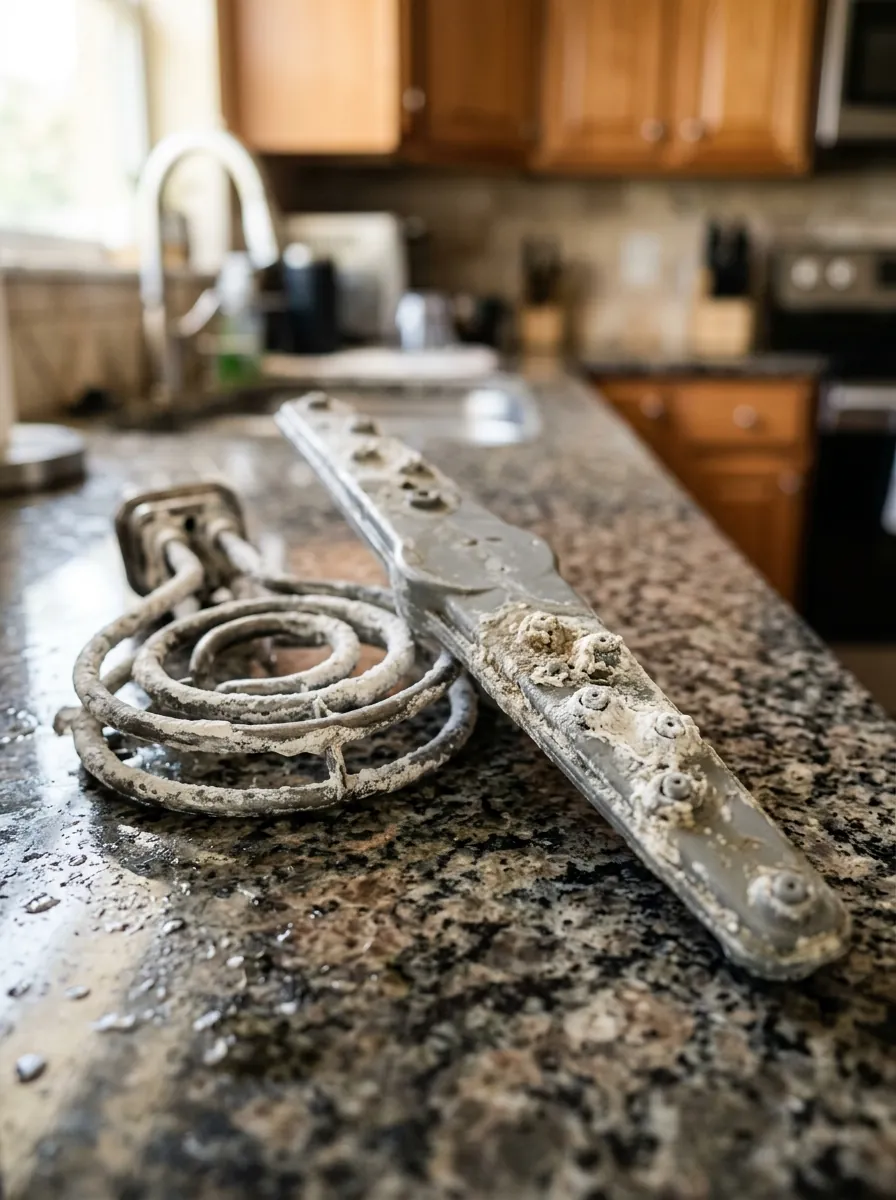
Hard water leaves mineral deposits every time an appliance heats it. In Tampa that means scale on dishwasher heating elements and spray arm jets, on ice maker inlet valve screens, and on the floor of every water heater tank. The symptoms build gradually, so they get blamed on age or detergent. Descaling and water treatment are what actually address it.
Where the Minerals Go
Hard water carries dissolved minerals, and heating it drops those minerals out of solution. They deposit on whatever surface did the heating and on whatever passages the water moves through.
That is why the appliances affected are specifically the ones that heat or meter water. Dishwashers, ice makers, water heaters, washing machines and coffee equipment. Everything else in the kitchen is unaffected.
The deposits build slowly and unevenly, which is what makes them hard to spot. Performance degrades over years rather than failing suddenly, so people adapt to it and then blame the machine's age.
Dishwashers Show It First
A dishwasher heats water every cycle, so it accumulates scale faster than anything else in the kitchen. Two places matter.
The heating element gets coated, which insulates it. Cycles run longer because the machine takes more time to reach temperature, and owners read that as the machine slowing with age.
The spray arm jets narrow. Each jet is sized to produce a specific pattern at a specific pressure, and as scale reduces the openings the pattern weakens and the arm spins more slowly. The top rack suffers first because that arm is furthest from the pump.
That is the real cause of most gritty dish complaints in this area. People change detergent, then rinse aid, then conclude the machine is failing, when clearing the arms would restore the wash in an afternoon.
Ice Makers and Water Heaters
Ice makers fail at the inlet valve. There is a fine mesh screen at the valve inlet, and mineral deposits collect on it and narrow the passage. The mold fills partially, so cubes come out small and hollow, and eventually production stops.
Clearing that screen often resolves it without replacing the valve, which is worth knowing before paying for a part.
Water heaters collect sediment on the tank floor. That layer insulates the lower element so it runs hotter and fails earlier, and it takes up tank volume so hot water runs out sooner than it used to. The rumbling or popping people describe is water flashing to steam underneath it.
Flushing a tank annually is the single most effective thing an owner can do for water heater life in this area, provided the drain valve cooperates.
Dishes gritty despite changing detergent?
That is spray pressure rather than cleaning agent. Clearing the arms restores the wash pattern in a way detergent cannot.
What Actually Reduces the Problem
Water treatment is the real answer where it is practical. A softener or filtration system reduces the mineral load reaching every water using appliance at once, and on hard supply the difference in service life is substantial rather than marginal.
Where treatment is not practical, a shorter maintenance interval does most of the same work. Clearing dishwasher spray arms and filters, checking ice maker valve screens, and flushing the water heater all need doing more often here than a generic manual assumes.
Rinse aid genuinely helps in a dishwasher, not as a cleaning agent but because it reduces mineral spotting on dishes and glassware. It does not address scale inside the machine.
Properties on well water are the hardest case. Supply there is typically harder than municipal water and varies property to property, which is why appliances on a well benefit most from treatment.
Washing Machines and the Quiet Version
Washing machines suffer from hard water in a less visible way than dishwashers do, which is why it rarely gets connected to the cause.
Minerals in the water reduce how effectively detergent dissolves and rinses, so residue stays in fabrics and in the machine itself. Clothes come out feeling stiffer, colors dull faster, and the drum develops a film that eventually smells.
On front loaders in this climate that compounds with the humidity problem, because a door boot that already holds moisture now also holds detergent residue. Leaving the door ajar between washes and running a hot cleaning cycle monthly matters more on hard water than it would elsewhere.
Using the correct dose of high efficiency detergent helps more than using extra. More detergent in hard water does not rinse better, it rinses worse, which is the opposite of what most people assume.
Signs Scale Is Affecting Your Appliances
- Dishes coming out gritty, worst on the top rack
- White film or spotting on glassware
- Dishwasher cycles running longer than they used to
- Ice cubes coming out small or hollow
- Ice production slowing over months
- Hot water running out sooner than it did
- Rumbling or popping from the water heater
- Visible chalky deposits inside the dishwasher
- A washing machine that no longer rinses cleanly
Hard Water Questions
Much of the bay area runs hard water, and properties on wells are typically harder still. It is consistent enough that scale is a routine factor in appliance faults here.
The ones that heat or meter water. Dishwashers, ice makers, water heaters and washing machines. Everything else in the kitchen is unaffected.
No, if the cause is scale narrowing the spray arm jets. That is a pressure problem and no cleaning agent addresses it. Clearing the arms does.
On hard supply, particularly a well, yes. It reduces the mineral load reaching every water using appliance at once, and the difference in service life is substantial.
Annually where the drain valve allows it. It is the most effective single thing an owner can do for tank life in this area.
The mold is not filling completely, usually because mineral deposits have narrowed the screen at the ice maker inlet valve. Clearing it often resolves it without a new valve.
With spotting on dishes and glassware, yes. It does not address scale building up inside the machine, which needs clearing rather than dosing.
Services Related to This Guide
Get the scale dealt with
Tell us which appliance is underperforming and whether you are on city or well water. Both shape the answer.