Seasonal
Getting Your Appliances Through Hurricane Season
Storm season plans usually cover windows and water. Here is the appliance version, before, during and after.
The Short Answer
Keep freezer and refrigerator doors closed and a full freezer holds safe temperature for roughly 48 hours, a full refrigerator for about four. Before a storm, turn appliances off at the breaker rather than leaving them to ride out a surge. Afterwards, check for water damage before switching anything back on, because running a submerged machine is what turns a repair into a replacement.
Before the Storm
Turn appliances off at the breaker rather than leaving them running. Power coming back after an outage does not always come back cleanly, and a surge reaching a control board is a common and avoidable loss.
Refrigeration is the exception worth thinking about. Leave it running until the power actually goes, because every hour of cooling before an outage extends how long the contents stay safe afterwards.
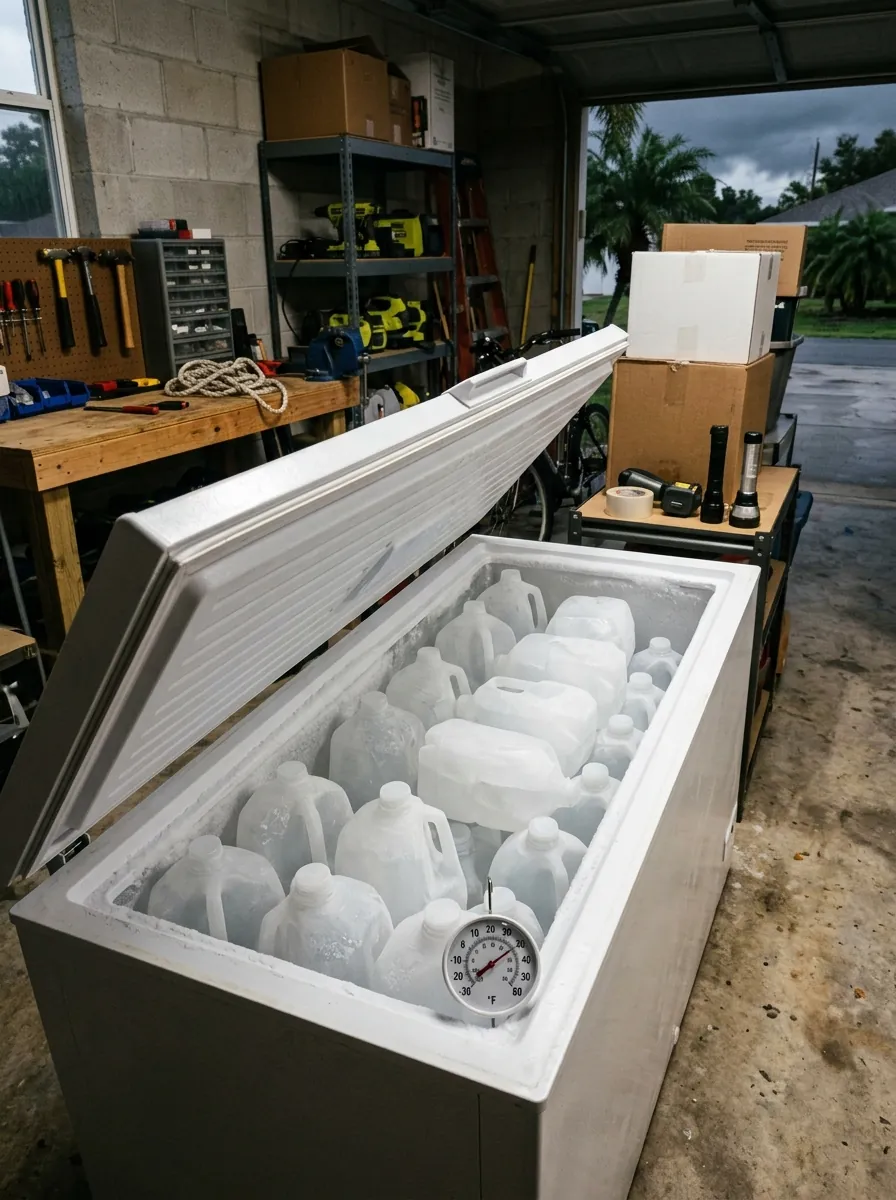
Turn your freezer to its coldest setting a day beforehand and fill empty space with containers of water. A fuller freezer holds temperature far longer, and frozen water bottles are useful afterwards.
Close the water supply valves to the washer and the dishwasher if you are leaving the property. A supply hose failing while nobody is home is a genuinely expensive kind of damage.
During an Outage
Keep the doors closed. This is the single most important thing and it is the one people find hardest. A full freezer holds safe temperature for roughly 48 hours unopened, a half full one about 24, and a full refrigerator around four hours.
Every time a door opens, some of that reserve is spent. If you need something, decide what you need before opening rather than standing there with the door open.
Move the most perishable items from the refrigerator into a cooler with ice rather than repeatedly checking the freezer. That protects the freezer's reserve, which is the more valuable of the two.
If you have a thermometer, put one in the freezer. Knowing the actual temperature afterwards is far more useful than guessing from how things feel.
After the Water
Before switching anything back on, look at how high water reached against each appliance. That single observation tells you which components were submerged and it is the most useful thing you can note.
Do not run a machine to test whether it survived. If water reached the base of a washer, the drain pump has been submerged and the motor probably has too, and running it wet is what turns a repairable machine into a dead one.
Let things dry properly before power goes anywhere near them. Then treat a delayed check as worthwhile even if everything seems fine, because corrosion works slowly and a pump that spins in week one can seize in week six.
Water heaters deserve particular attention. Gas controls and electrical connections do not tolerate submersion, and a tank in a low room that took water should be assessed rather than simply relit.
Appliance took water in a storm?
Do not run it to test it. Switch it off at the breaker and call, because running a submerged machine is what ends it.
Bringing Everything Back
Turn the water supply valves back on slowly and check each connection for weeping before you leave the property. Valves that have been closed for a while sometimes do not reseal cleanly.
Bring appliances back one at a time rather than switching every breaker at once. If something is going to trip, you want to know which machine did it.
For refrigeration, check the actual temperature rather than assuming. A unit that ran warm for a day needs several hours to bring the cabinet back down, and food safety decisions should be made on temperature rather than appearance or smell.
If a machine behaves oddly in the first few days, do not wait it out. Post storm faults tend to get worse rather than settle, and catching them early is usually cheaper.
What Not to Do
Do not open the freezer to check on things during an outage. Every opening spends reserve you cannot get back, and how food feels tells you far less than a thermometer would.
Do not run a generator indoors or in a garage, and follow the generator manufacturer's guidance on how anything is connected. From the appliance side, a refrigerator is a sensible thing to prioritize if capacity allows.
Do not switch every breaker back on at once when power returns. Bring appliances back one at a time so that if something trips you know which machine caused it.
And do not judge food safety by appearance or smell. Temperature is the only reliable measure, which is why a thermometer placed in the freezer before the storm is worth more than any amount of guessing afterwards.
Storm Season Appliance Checklist
- Freezer turned to its coldest setting a day ahead
- Empty freezer space filled with containers of water
- A thermometer placed in the freezer
- Appliances switched off at the breaker before the storm
- Washer and dishwasher supply valves closed if leaving
- Doors kept shut throughout any outage
- Water height against each appliance noted afterwards
- Nothing switched on until it has dried properly
- Machines brought back one at a time
Storm Season Questions
Keep it closed and a full freezer holds safe temperature for roughly 48 hours, a half full one about 24. A chest freezer holds longer than an upright because cold air does not spill out when it is opened.
About four hours unopened. That is much shorter than a freezer, which is why moving the most perishable items to a cooler with ice is worth doing early rather than late.
Switching off at the breaker is better than unplugging, because it removes power without putting your hand behind an appliance. Refrigeration is the exception, leave it running until the power actually goes.
Not necessarily. Submerged machines often run immediately and fail weeks later once corrosion has worked on bearings and windings. A check is worth doing rather than assuming.
Yes. Salt residue keeps working on metal after the water has dried, which is why appliances near the bay fare worse after a storm than the same machine inland.
On temperature rather than appearance. A thermometer in the freezer before the storm is what gives you a real answer afterwards, and it costs almost nothing.
Follow the generator manufacturer's guidance on connection and never run one indoors or in a garage. From the appliance side, a refrigerator is a sensible thing to prioritize if capacity allows.
Services Related to This Guide
Get a storm affected appliance checked
Tell us how high the water reached against the cabinet. That measurement tells us what was submerged.