Costs
What Appliance Repair Costs in Tampa
Ranges rather than promises. Here is what common repairs typically cost in this area, what pushes a number up, and what a fair estimate should include.
The Short Answer
Most common household appliance repairs in Tampa land between $145 and $485 with parts and labor. Laundry and cooking repairs sit toward the lower end, refrigeration toward the middle, and sealed system work starts around $520. The part, the appliance type and how hard it is to reach all move the number, so treat any published figure as a planning range rather than a quote.
What the Ranges Actually Look Like
Dryer repairs are usually the most affordable, because the parts are simple. Elements, thermal fuses, thermostats, belts and rollers commonly land between $145 and $310 with labor.
Washer repairs sit slightly higher. Drain pumps, lid switches, door locks and couplers generally run $155 to $340, with front loaders costing more than top loaders because they take longer to open up.
Refrigeration is the widest range. Fan motors, thermostats, gaskets and defrost parts fall between $165 and $395. Sealed system work, meaning compressors and refrigerant, starts around $520 and is always worth pricing against replacement.
Dishwashers and disposals sit at the affordable end. Drain pumps, valves, gaskets and latches run $155 to $335, and a disposal jam or reset fault is often under $215.
What Moves the Number
The part itself is the biggest factor and it varies enormously. A fan motor and a control board are not in the same conversation, and control boards are model specific which pushes both cost and lead time up.
Access is the second factor and it is underrated. A freestanding machine with room around it is a different job from a built in unit fitted into cabinetry, a stacked pair in a hallway closet, or a wall oven that has to come out of a cutout.
Appliance type matters within a category. Built in and panel ready refrigerators cost more to service than freestanding units. Gas appliances take longer to diagnose than electric ones because the safety chain has more links to test.
Age affects sourcing rather than labor. Parts for appliances past about twelve years are harder to find, and that sourcing time is part of the total even when the part itself is inexpensive.
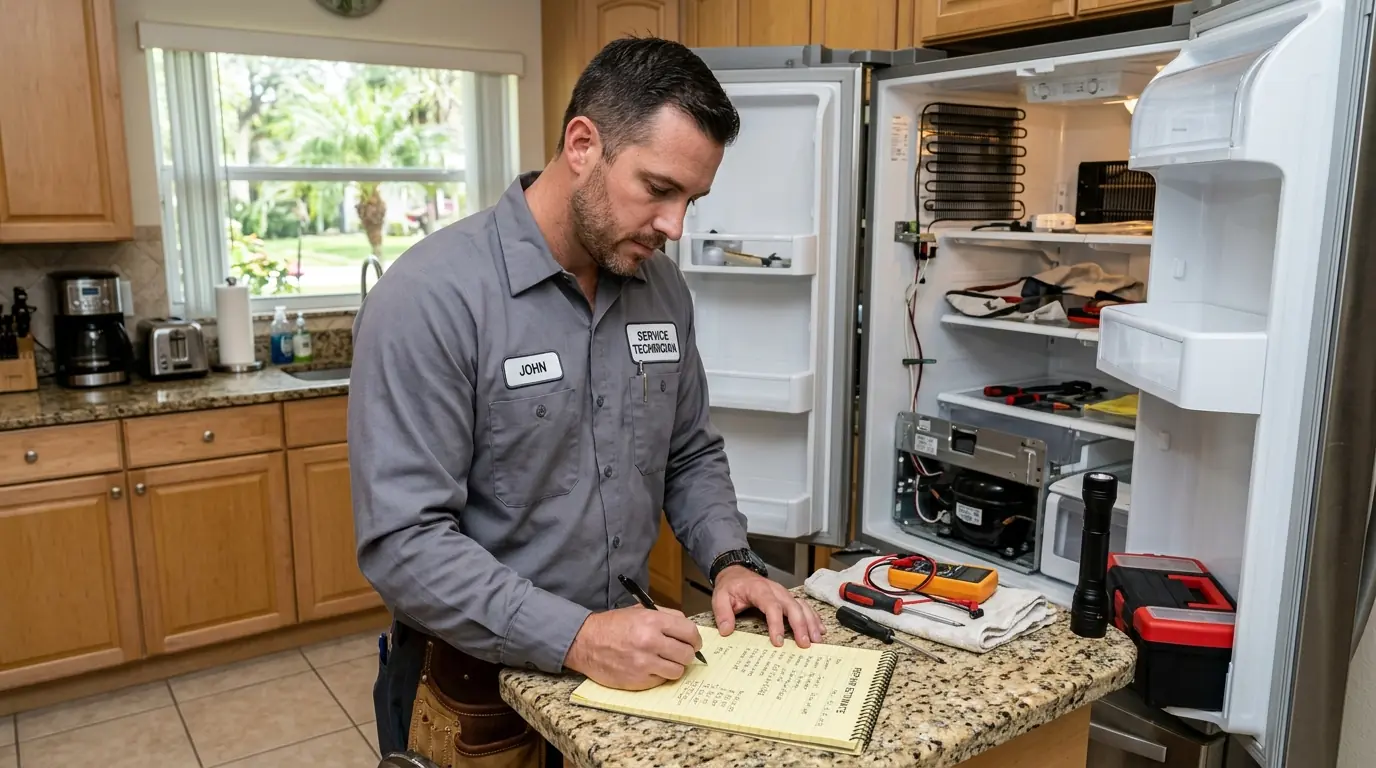
What a Fair Estimate Should Include
A clear diagnosis of what failed and why, not just the name of a part. If the answer is that a thermal fuse blew, the follow up question is what made it blow, and a good technician will have checked.
The cost of the part and the labor separately or together, given before work starts rather than after. Nobody should be finding out the number once the machine is in pieces.
An honest read on whether the repair makes sense given the appliance's age. A technician who never recommends replacement is not doing you a favor.
Whether the part is carried or has to be ordered, and if ordered, a realistic date rather than an optimistic one.
Want a number before anyone drives out?
Describe the symptom and the brand on the phone. We can usually give you a realistic range and tell you whether the part is one we carry.
The Repair or Replace Question
The rough rule most of the trade uses is age against repair cost. If the appliance is past about eight years and the repair approaches half the price of replacing it, replacing usually wins. Under that, repair almost always wins.
There are important exceptions in both directions. Built in appliances fitted into cabinetry are worth repairing much longer, because replacement means matching a cutout and often cabinetry work. A repair that would be marginal on a freestanding range is clearly worthwhile on a built in wall oven.
In the other direction, entry level appliances with expensive faults are frequently not worth it. A wash pump or control board on a builder grade dishwasher that has run several thousand cycles is money better spent on a mid range replacement.
Wear is also cycles rather than years. A dishwasher run three times a week for twenty years has completed fewer cycles than one run twice daily for four, which is why gently used older appliances are often worth keeping.
Where Money Gets Wasted
Replacing a part without finding out why it failed. A thermal fuse replaced without clearing the vent that blew it means the same repair again in a few months.
Replacing an appliance when the problem is the installation. An overloaded kitchen circuit, a restricted drain line, a crushed dryer duct or a refrigerator alcove with no clearance all produce faults that a new appliance will reproduce.
Paying for a diagnosis you could have narrowed on the phone. A precise description of what the machine does at each stage often identifies the likely part before anyone drives out, which decides what rides along on the van.
Questions Worth Asking Before You Agree to a Repair
- What failed, and what made it fail
- Is the part carried or does it need ordering
- What is the total including labor
- How old is this appliance and is the repair sensible at that age
- Will the same fault return if nothing else changes
- Is anything else on this machine near the end
- What happens if a second fault turns up mid repair
- Will the machine be tested before you leave
Cost Questions We Get Asked
No. They are general planning ranges for the Tampa area. The specific appliance, the part and how hard it is to reach all change the number, which is why a real figure comes after a diagnosis.
There is a charge for the visit and the diagnosis, and it should be told to you when you book rather than on the doorstep. Ask any company that will not tell you upfront.
They are model specific rather than shared across a range, so they are produced in smaller numbers and usually have to be ordered. That is also why they add lead time.
Usually, but not always. Past about eight years with a repair approaching half the replacement cost, replacing generally wins. Built in appliances are the main exception because replacement involves cabinetry.
Access. The unit has to be released from cabinetry, drawn out and refitted without damaging trim, and its parts are more often model specific. The labor difference is real rather than a markup.
Overnight and holiday attendance carries more than a weekday appointment. The repair itself is priced the same way, and you should be told the difference on the call before anyone is dispatched.
It complicates things. If the part turns out to be the wrong one or is faulty, the visit has been spent and nothing is fixed. It is usually better to have the diagnosis first and then decide.
Services Related to This Guide
Get a realistic number for your repair
Tell us the appliance, the brand and what it does. We will give you a range and tell you whether the part is on the van.