Emergencies
Appliance Emergency? What to Do in the First Ten Minutes
What you do in the first ten minutes usually matters more than how fast anyone arrives. Here is the short version for each situation.
The Short Answer
For water escaping from an appliance, close the supply valve first, then switch off at the breaker if water has reached anything electrical. For refrigeration losing temperature, keep the doors closed and move perishables to a cooler. For any burning smell or sparking, switch off at the breaker. For a gas smell, do not operate anything, ventilate, and call the gas utility if it is strong.
Water Escaping From an Appliance
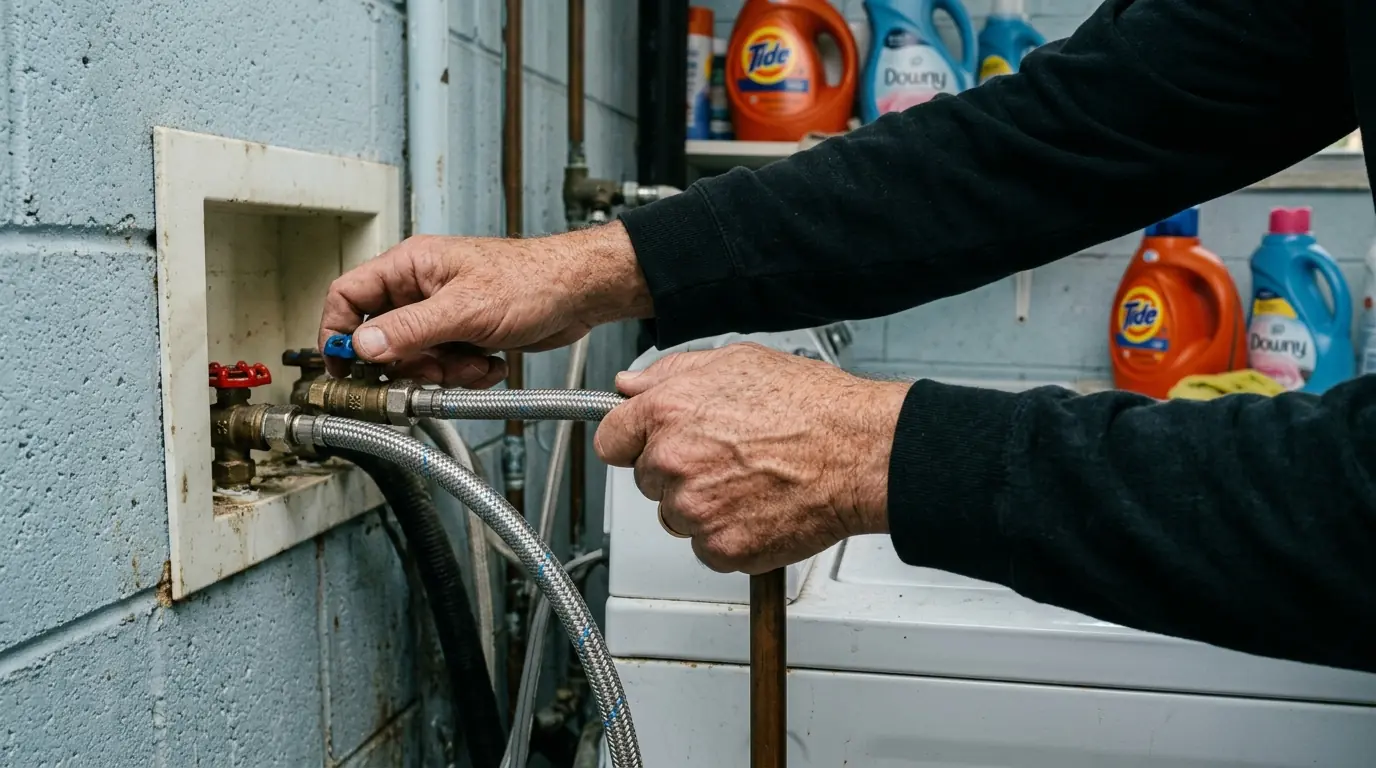
Close the supply valve first. On a washer there are two valves behind the machine, hot and cold. A dishwasher and a refrigerator line usually shut off under the sink or behind the appliance.
If the valves will not turn, which is common on installs that have never been used, go to the main house shutoff. That is why it is worth knowing where yours is before you need it.
Once the water is off, switch the appliance off at the breaker if water has reached anything electrical. Use the breaker rather than reaching behind a wet machine to unplug it.
Then deal with what is on the floor, because standing water reaches cabinet bases and subfloor quickly. Everything after that can wait for a technician.
Refrigeration Losing Temperature
Keep the doors closed. This is the whole game and it is the hardest instruction to follow. A full freezer holds safe temperature for roughly 48 hours unopened and a full refrigerator around four.
Move the most perishable items from the fridge section into a cooler with ice rather than repeatedly opening the freezer to check on it. The freezer's reserve is the more valuable of the two and every door opening spends it.
Do not stack food on top of the unit or block the vents trying to help. Airflow is usually part of the problem rather than something to restrict further.
When you call, say which side is warm. Warm fridge with a cold freezer is a different fault from both sides warm, and that answer decides which parts ride along.
Burning Smells, Sparking and Tripping Breakers
Switch off at the breaker rather than at the appliance. A sparking machine is not something to reach behind, and the breaker removes power from a safe distance.
Do not reset a breaker repeatedly to see if it holds. If an appliance is drawing current it should not, each reset is another chance for something worse. Leave it off and get it looked at.
A burning or scorched smell from a dryer is the one to take most seriously, because it usually means lint against a heat source. Stop using the machine entirely rather than finishing the load.
Note what the machine was doing when it happened. Which cycle, how far in, whether anything unusual preceded it. That detail is genuinely useful to a technician.
Something failing right now?
Call rather than waiting for morning. The first thing we do is tell you what to shut off, and that usually saves more than the repair costs.
Anything Involving Gas
This one is different from the others because it stops being an appliance problem. Do not operate the appliance and do not use light switches or anything else that could spark.
Ventilate the room by opening windows and doors. If the smell is strong, leave the property and call the gas utility before calling an appliance company.
Once the situation has been made safe, the appliance side can be looked at. Igniters, flame sensors, valves and connectors are ordinary repairs, but they come second.
If you have ever smelled gas near an appliance even briefly, mention it when you book. It changes the priority of the visit.
What to Tell Us When You Call
The more precisely you can describe what happened, the more useful the first minute of the call is. Which appliance, what it was doing, and at what point it went wrong.
For water, say whether it appeared during fill, wash, drain or spin. Different cycle stages pressurise different parts, so that single detail often names the failed component before anyone arrives.
For refrigeration, say which side is warm and whether there is frost anywhere. Warm fridge with a cold freezer is a different repair from both sides warm.
And tell us what you have already been able to shut off. If the water is off and the breaker is down, the situation is stable and we can plan properly rather than treating it as still unfolding.
Know These Before You Need Them
- Where the main water shutoff for the house is
- Where the washer supply valves are and whether they turn
- Which breaker controls each major appliance
- Where the gas shutoff is if you have gas appliances
- Whether your freezer has a thermometer in it
- How old the washer fill hoses are
- Whether the laundry area has a floor drain or a pan
- The model number of your main appliances
Emergency Questions
Refrigeration losing temperature, water escaping from an appliance, and anything involving gas or a burning smell. Those three cause loss or risk while you wait. Most other faults can be scheduled.
Close the supply valves behind the machine. If they will not turn, use the main house shutoff. Then switch off at the breaker if water has reached anything electrical.
Keep doors closed and a full freezer holds roughly 48 hours, a full refrigerator about four. Opening the door repeatedly is what burns that time.
Once, to see whether it was a one off. If it trips again, leave it off. Repeated resetting on an appliance drawing fault current is the wrong response.
Do not operate the appliance or any switches. Ventilate, and if the smell is strong leave the property and call the gas utility first. The appliance side comes after.
Call. If the fault can safely wait, we will tell you that on the phone and book a normal appointment instead. That advice costs nothing.
The appliance and brand, what it is doing, when it started, and whether you have been able to shut anything off. Those four things shape the whole response.
Services Related to This Guide
Call now and we will talk you through it
Tell us what is happening. The first thing we do is tell you what to shut off, before anyone drives out.